
The Wise Man's Fear (is apparently the whore)

Reading Name of the Wind is a pleasure in so many ways.
Dark chocolate, someone called it.
And I tend to agree.
It's rich, and dark, and something to savor.
The language is slow and meandering, the events happen naturally and are told without fanfare. The story is interesting and keeps you engaged.
Let me just get it out of the way that I like Name of the Wind in general, it is a very well plotted and written book.
Before getting to the parts that I don't like.
Why do people (or specifically, I), only want to talk about things they don't like? I don't know. But there it is. There are things I don't like, and it rankles to see these things in an otherwise good and 'woke' book, so I am going to write about them here.
The problem is how the book looks at women. In other words, the same old problem.
Is the heroine allowed to dally by choice?
This book tries to be woke, by accepting the protagonist's love interest's dalliances, but only partly. The love interest's dalliances are acceptable only because she is forced to, and not because she wants to.
Sigh.
Ok, let's start at the beginning. (Full spoilers follow, so please read at your discretion)
The hero of the book is Kvothe. We meet him as a child, a ten-year-old who is fascinated by magic, and starts learning it from a wandering arcanist (the name for magicians in this world). After some idyllic months, tragedy strikes suddenly: Chandrian, a group that is believed to exist only in folklore, turns up out of the blue, and kills his entire family and everyone he knows. Kvothe is left alone in the world. He runs to a big city and struggles as a street child. Somehow he manages to enter the university and there begins his magical education and a new life by dint of his musical and magical skills. Always, at the back of his mind, he carries the story of the Chandrian, looking everywhere for information about them, without knowing what he will do when he finds the information or comes across them in person. (I am guessing that like every other fantasy story, he will end by killing the Chandrian. But as of now, at the end of Book 2, there are no indications that this will happen.)
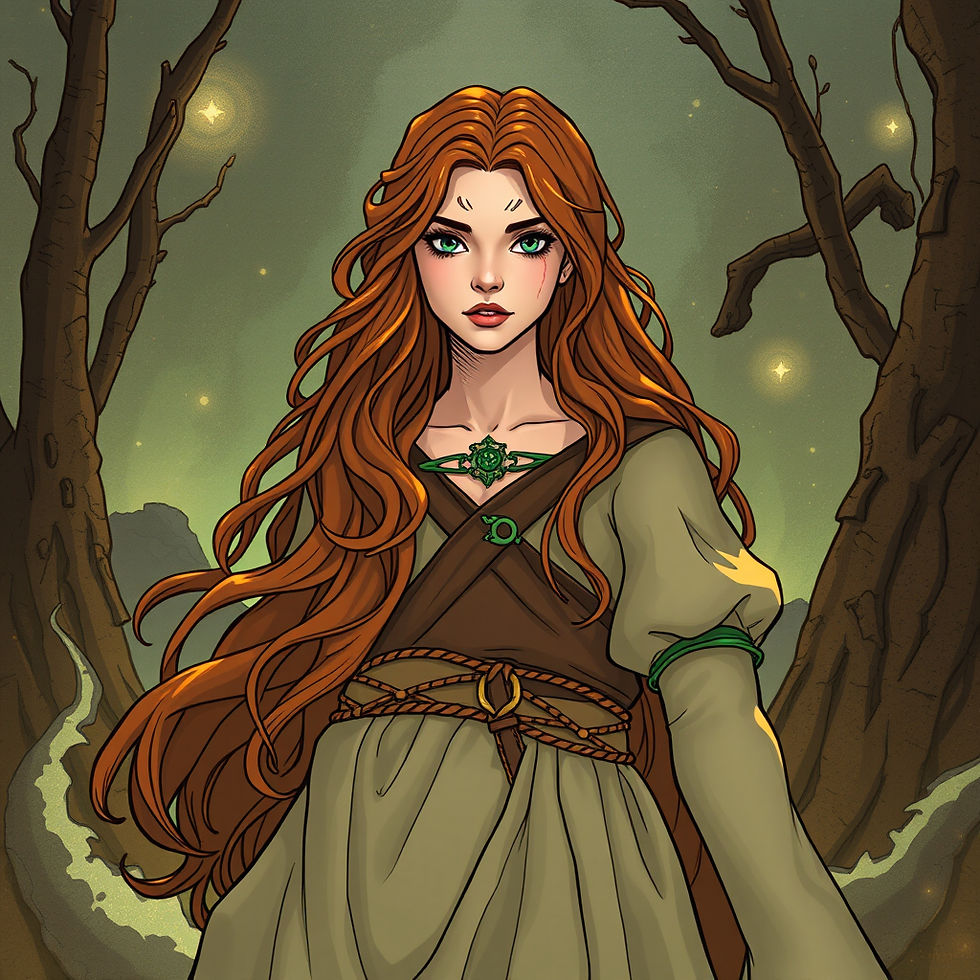
So anyways, at some point he meets a girl called Denna, and becomes fascinated by her. She does seem a fascinating kind of girl. A wildly talented musician, who doesn't get her due because she is still poor, looking for a patron and thus not influential enough. Beautiful in a way that surpasses mere verbal description. Someone adventurous, someone always wandering, someone who 'doesn't let the grass grow under her feet.' Someone who scoffs at princely manors and is adept at living the street life, and yet is educated and noble. Fascinating indeed, I am not surprised that Kvothe develops an obsession for her.
Kvothe and Denna strike up a friendship. Despite his attraction towards her, he never tries to express it, because he can see that she has many admirers, that she uses them for patronage but she discards them as soon as they try to get possessive. He doesn't want to be discarded, so he finds friendship safe. So far, so good.
But. It is implied that Denna may occasionally allow a patron to become intimate either because she cannot prevent it, or because she can get something in exchange. This all is implied in Kvothe's conversation with Deoch, a partner at the music house, Eolian. Deoch and Kvothe agree that since Denna is poor, she has to survive somehow, and if men fall at her feet and throw pearls and diamonds at her, it is not her fault, and if she is occasionally intimate with some of them, then she is not to be blamed for it also.
Well and good, I suppose. Men finally accepting that good women need not be virgins.
But then, I do find it problematic that a woman's dalliances are to be accepted only if she does it under duress. Like she doesn't really want to, but she has to, to survive.
What if she wants to?
What if Denna actually enjoys being intimate with these other men? And then has no qualms about ditching them when they get too possessive?
In that case, I suppose, Kvothe would NOT love her, be obsessed with her.
Because a woman who is not loyal to a man, and dallies by choice, is not wife material.
It's the same patriarchy all over again. And that is my problem. That Kvothe is supposed to be accepting this promiscuous woman, and thus is a modern, woke man who acknowledges that women, too, are human beings who have their own journey of life that is not necessarily about searching for one man to bind themselves to forever.
But actually, Kvothe is not accepting Denna's freedom of choice. He is accepting her 'pure heart' that is badgered by life into unpleasant dalliances, but which actually longs for stability and loyalty of one man.
(This is one of the reasons I liked Game of Thrones and books by Sarah J. Maas. In Game of Thrones, the heroine is allowed to fall in love with a husband she was pawned to, choose a loveless marriage of convenience for political gain, then have a bawdy affair purely for pleasures of the flesh, ditch all pretenses of romance along with this man when it is time to embark on her lifelong ambition, before finding someone she likes. I like that she is not judged for any of it. And the whole point of Sarah J. Maas' writing seems to be to overturn these old tropes about virgin heroines, and I love her for it.)
Now let us contrast it with Kvothe's his own philandering. He is an innocent virgin in the beginning of the book. Diffident, intimidated by Denna and every other woman. At some point, he is taken under the wing by a very sexy woman who knows the ways of the flesh (more on that later). After which, he is ready to take on the world. Storm the world, more like. And what does he do then? Does he, like Denna, tolerate intimacy because he cannot prevent it or because he can get something in exchange? Oh no, like every other hero who philanders to his fill before choosing a 'good' girl to settle with, he is very happy to be intimate with as many women as catch his fancy. By the end of Book 2 we have at least three named partners, with many more implied.
What if Denna, too, had been having fun of her own choosing, cavorting with any number of lovers, and then ditching them when she wanted to?
What if she had been unapologetic like him, about the different frolics?
Would Kvothe have accepted her in the first place?
Could Kvothe have handled her?
Perhaps not.
Already, we are seeing that Kvothe cannot even handle this poor, badgered girl. He fights with her, and is not able to apologize or sort things out with her when he is in the wrong.
What would he do with an actual, full-blooded woman who he is attracted to, but who refuses to be tied to him, and who makes her own choices?
We find out soon enough that such woman are far, far, out of his league and he cannot handle them.
Femme Fatale
At some point in the course of his adventures, he comes upon Felurian. Felurian is a thing of fables – that very famous fable that seems to cross all boundaries of geography and culture and unite men of all ages and races.
Yes, that famous fable which claims that there are beautiful women out there who will lure young men through their beauty and kill them. As if beautiful women have nothing better to do than waylay men and kill them. Ha!
Men are not to be waylaid by their charms – or else they will get killed. If it still doesn't sound familiar, you can think of famous female figures in mythologies like mermaids, sirens, Circes, etc, who are all known to lure men with their beauty and ultimately kill them. The story is even very famous in Nepal as well – of the Chudail who walks the roads lonely at night, meets up with a young man every night, and the smart young man can get rid of her by following her, where he will find a pile of bones, and burn them.
But I digress. Let us go back to Felurian. So Felurian is the quintessential beauty in this world. The one who lures men through her charms, and then sends them to their death. Once a man is entranced by Felurian, nobody ever sees him ever again. Or he might come back to the world several hundred years later.
To me, the story of Felurian, and every other story of this kind, including the story of Chudail circulating in Nepal, speaks the same truth: the truth of man's fear of female sexuality. Actually there are very many ways of expressing this fear, but let us focus on just this one, for now.
What follows is my opinion, but I believe that most men are so attracted by beautiful women that they lose their senses. They fear this state, because, well, the fear is totally understandable, I guess. To lose your senses. To lose your reason. To lose your capacity to judge. Women rarely lose these things to men, but that is another story. And so men fear the beautiful woman because they do not want to lose these things. But the problem is, they desire this beautiful woman. The more alluring she is, the more desirable, and thus more fearsome.
Many, many, many folktales are told about how men should conquer the beautiful woman – all of them involve some kind of control. Many tales end with the hero outsmarting the woman – Odysseus and Circe/Calypso come to mind. He is one of the nicer ones, satisfied with only outsmarting/overpowering the woman and having his frolic (while he tests his wife for fidelity). Many tales end with marriage – we have these tales here in South Asia, with the folktale hero charming the beautiful woman so that she agrees to marriage, which means of course that she falls into the servile role expected of wives in South Asia. Many stories also end with killing the woman. Here I am thinking of The Three Musketeers where Milady de Winter is killed. Yes, the way the Three (at this point four) musketeers affirm their heroism is by killing a beautiful woman.
Very few stories end with accepting the beautiful woman's superiority over the man. Because that would not be acceptable to men at all.
In reality, it is very obvious that even when a man and a woman are equal in other ways, her beauty gives her an edge, a superiority. And in most cases, men and women are not equal – women's central role in the circle of life, as opposed to the peripheral role that men play, give women more wisdom, which means that the average woman is usually superior to the average man. If you add beauty to it, then the woman is vastly superior.
The Femme Fatale must be killed (or at least overpowered)
The stories know this, of course. And one way to deal with this thing is some sort of dumbing down of the woman which will allow the man to become superior. Here I am thinking of this Nepali novel called Anuradha – where the protagonist falls for a mad woman. She is mad, hence he, the sensible one, is superior, and tells her what to do. She is weak and in need of safe space, which he provides.
All of this comes to play in the story of Kvothe and Felurian.
What happens when Kvothe meets Felurian?
Kvothe first sights Felurian singing alone in a circle of moonlight. Stark naked. Because that is what women like to do attract men. Sit around singing stark naked. Hahha.
And what does Kvothe do? Does he run away, like every other man with him? No, he decides that he will join Felurian. Note this point. He joins her of his own free will, curious about this creature of fables. And full of desire for her, as well, which is proven in the next scene where they tumble. And then he settles down to a cosy life with her, with no questions at all about the situation, like who, what, where, how, when, and most importantly, Why?
So anyway, Felurian is sexy. And her sexual appetite is vast and unsatiable, basically. This reminds me of a joke. What is one thing that everyone talks about but no one has ever seen? The answer is a nymphomaniac. Hahahaha. Because the nymphomaniac is a figment of male imagination. Men think there are women out there who are waiting to devour them, but seriously, women would rather not have these idiot men pouncing on them.
Felurian is also vastly superior to Kvothe, and not just in beauty and sexuality. It is evident that while Kvothe is learning newfangled, formulaic magic at the university, Felurian's magic is ancient and intuitive. It includes collecting darkness to make a cloak of shadows, among many other things.
And what does Kvothe do to downgrade her superiority? Not Kvothe, I suppose, it is the writer, who, unable to handle Felurian's superiority, makes her extremely dumb in some ways, so that we are supposed to accept that even a woman who collects darkness in her arms and weaves a cloak of shadows is vastly inferior to his bumbling teenager of a hero. For example, she is unable to articulate the smallest of things. When Kvothe asks her how to gather the shadows, she spread her arms and says: thus. Even to the reader it is evident that such ancient, intuitive magic that belongs to a fey being thousands of years old can neither be taught nor articulated. And yet, Kvothe deems her dumb for this inadequacy. It is like an alien coming to earth and asking a woman how she breathes. And if a woman is unable to present the alien with a complex schema of lungs pumping air in and out, he deems her dumb.
In order to downgrade her further, Kvothe forms this understanding of her that she has no sense of right or wrong. She is like a child. No, not even a child, but an infant, who has no idea of right or wrong, and simply grabs what she wants. If she cannot have it (here, the lover of her choosing), she will kill him. She will either ride him to death, or kill him for escaping. Hehe. I can't even point out how juvenile this logic is, cloaked in all the 'dark chocolate' language.
And finally, let us look at what Kvothe does with her. In this world, when Felurian gets ahold of you, she either rides you to death (the poor sods, how sad they must be, after having walked into her glade willingly and knowingly), or she kills you if you try to leave (no sense of right or wrong, remember), or she lets you go when you are too old, in which case you will have aged 300 years in the human world. So what is poor Kvothe to do?
Poor Kvothe, lured in so unwillingly by a naked woman, and so unhappily wallowing in her charms, her food consisting of the freshest fruits, her knowledge, her magic and her relentless sex. Poor Kvothe, such a horrible time he is having.
Hehe.
So anyways, what does he do?
Does he acknowledge that Felurian is vastly superior to him, and decide to enjoy what she has to offer,? For a while. He enjoys, that is. On the acknowledgement, he conveniently reduces Felurian to a blithering less-than-infant, so no need to acknowledge anything other than her flesh.
But then he tires of the enjoyment, because he has 'higher' things to do in the world than sensual pleasures.
And then, does he talk to her in a sensible way, tell her he has other things to do, ask her for leave, thank her for her priceless time and gifts, and leave with fond memories?
No, no, and no. She has no brains, remember. She won't understand if he says all those things. Also, she won't let you leave. Sex crazed, remember? If she can't get her hourly dose, she will simply kill you.
So what is poor Kvothe to do, except try some deception, maybe? Yes, write a poem that makes fun of her lovemaking, and when she is angry, tell her he will complete it nicely if only he can get experience with other women and compare her skills to mere mortals'. At which point, she will agree, the dumb thing, because she is so vain that she cannot bear to have her reputation as a SEX CRAZED FEMALE be tarnished. Heh! How clever of Kvothe! How very clever!
But then, somehow, she simply is not agreeing to take the final step of letting him go! Ohhh poor Kvothe, he is so awesome that a goddess who is thousands of years old thinks she can do no better than him!
And so, finally, how do we treat women who don't listen? Who have no brains? Who are determined to cling?
Bind them, of course.
No kidding.
Kvothe binds her with magical force, somehow managing to summon a magic stronger than hers. He holds her in a tight magical grip, choking her. Yes, almost killing her.
She regards him with mean, narrowed eyes, and here we can just visualize her minuscule intelligence calculating the pros and cons.
But in a moment of magnanimity, Kvothe realizes that killing her would be like killing a butterfly. An evil act.
Haha.
How magnanimous of him, to spare her life, while almost strangling her into submission.
For submit she does. Because even the newborn babe's intelligence that that writer allows her recognizes brute force. And she calculates that she would rather live.
Somehow, using force against a being whose only crime is to be sexually attractive, is the definition of manliness in this book.
And Kvothe is so proud. So, so proud that his brute force of a magic that he managed to summon by accident, overpowers Felurian's ancient, gentle, delicate, inarticulable magic. So, so proud.
This is nothing to be shocked about, it has always been thus in men's literature. Remember the four musketeers, the bravest men of their era, executing Milady de Winter, the beautiful woman who can have power over any man?
Nothing has changed in the newfangled fantasies with woke men and 'empowered' women: empowered women are acceptable only if they are virgins, or at least virgins at heart like Denna. Force is still the only way to deal with whores like Felurian. But women must be thankful because nowadays men are not killing whores, they are only threatening them with chokes and strangles.
Why is the portrayal of a folklore figure in a fantasy book problematic?
It is problematic because this is how most men look at all women. You can see this portrayal of women in most things that men produce: books, music, film.
And this portrayal is misogynist. I believe I don't need to explain the point that this view is misogynist. If I do, the point is lost.
Transposing this real life misogyny on a fantasy woman extends the misogyny. In fact, this strengthens the misogyny further, because it makes the violence against women acceptable. Maybe force would not have been acceptable if it was Denna or another human woman. But against a vastly powerful, brainless, magical being who would kill you otherwise? Sure, go ahead. However, the misogyny is then easily transferred back to human women, because:
To me, this episode portrays the following ways that men look at, and speak of, women in general, in real life.
- Women are devious beings who lure men in with their sexuality.
- If women display their sexuality and 'trap' men, it is the woman's fault. Not the man's, even if he walks into it willingly, because men never have a choice in the face of female flesh.
- Engagement with women is merely pleasure of the flesh. It offers nothing more that men should stay for.
- Women have no brains.
- Women cannot tell right from wrong.
- These crazy beings want nothing but to bind men to themselves forever as sex slaves.
- But if men fall into their plans, they will become sex slaves and will be unable to do anything substantial with their lives.
- Women might occasionally feel the 'great sorrows' that cross the hearts of men, and they might, in their naïve, childish, understanding of it, offer some sort of comfort. However, the comforts that they offer are in the form of fleshly pleasures, and are thus no comfort at all, even though a man is permitted to partake of them. Women cannot begin to fathom the greatness of thought that crosses men's brains. Hence, they cannot be equal partners to men.
- Hence, 'men' should escape such sex-crazed, dumb women and go about the world to do 'manly' things
- How to do so? Should men accept that all this is happening because nature made women superior to men and that it is in man's bones to simply bow to the wishes of the woman and do as she guides? Oh no, that is impossible. Women may be attractive physically but they have no brains, remember. So how can she be superior? He, the one with the brains, is far more superior.
- Women are vain beings. Stoking their vanity may be tried. It will get you what you want, most times. Or not, when the woman is determined to be sex crazed. Sex craze is greater than even vanity for these brainless creatures, remember.
- Can he convince her of his superiority so that the problem is solved forever? No, no conversation of any sort is possible. Women don't have brains, remember. She won't understand.
- So what is he to do?
- Sigh. The usual. What else is there to do? Use some good old force! Bind her! Hit her! Slap her! Kick her! Batter her! Anything, until she agrees to let you go and do your manly things upon the world.
- What? Is it such a bad thing? He didn't kill her, after all! No, He is a great man. He understands that women are living beings too. And, no matter how dumb or sex crazed she is, he understands the value of life, and so he will spare her life. Let her remember this, in case she complains of the force he used upon her. That he spared her life. So she better be grateful!
Replace Felurian's magic and power with 'sexuality', and there you have, a normal woman. This how an average man feels about an average woman.
If you're not convinced, consider this quote:
"Felurian had a way of making requests that took some getting used to. I’d discovered that unless I was steeling myself to resist, I’d find myself automatically doing whatever it was she asked of me. It wasn’t that she spoke with authority. Her voice was too soft and edgeless to carry the weight of command. She did not demand or cajole. When she spoke, it was matter-of-fact. As if she couldn’t imagine a world in which you refused."
Isn't this how men always speak of women? The part where the woman asks and they do things of their own free will, and complain later that kt le fasaichhe?
Real woman versus fantasy woman
I think the book lays out male fantasies. The real woman versus the fantasy woman. The real woman here is Denna. Despite all the flaws in her portrayal, Denna is very real and relatable. At some point, Kvothe quarrels with her. The quarrel, too, is very real and relatable. Men and women quarrel all the time. And what does Kvothe do? Like all men, instead of sitting down with her, talking to her, acknowledging her viewpoints and then trying to find a mid point, he blames her, and flees.
Straight into the arms of Felurian.
To me, this turn of events represents another male fantasy.
- Real women are problematic. To be with real women, you have to do the emotional hard work. Acknowledge where she is right, and admit where you are wrong.
- However, this is very difficult.
- It is easier to not face the woman at all, to run away. This way you don't have to lose, so you always win.
- It is easier to be with a woman with whom you don't have to do the hard work.
- Such women don't exist in real life. But they can be bought. The fantasy is that they give you everything a woman gives: love, sex, care – without giving you the headache that comes with any and all real relationships.
- In the book, Felurian represents the bought woman. In other words, the whore. The one you don’t have to love. The one you don't have to apologize to, don't have to do the emotional hard work for. The one you can simply fuck and forget, because she has no emotions, no life. Because she is not a 'good woman.' She is simply a whore.
- And so he goes to the fantasy woman. Someone who only wants to fuck him and doesn't demand his emotions. But the reality is opposite. He is the one who wants to simply fuck and forget.
Other problematic portrayals:
There is a group of evil men (and women) who capture and rape two girls. Enter Kvothe, who gets his excuse for gory manly violence, and kills them all in gory ways. And when the abused girls complains to him that men are horrid, Kvothe's response is literally, 'not all men'.
Like, seriously?
He who strangled an ancient, magical being for the crime of being sexually attractive and teaching him the arts of the flesh, is saying that all men are not bad?
He even took away a poor, abused girl's platform to complain about her abuse.
Also, did we read the book for this? Don't we have enough of this 'not all men' nonsense in the real world, to be dealing with it in fantasy as well?
Conclusion
With this last example, I realized that for men, fantasy, or any other book, is simply a canvas to paint their teenage fantasies which they never grew up from, refuse to grow up and see their place in the world, be nasty to women, and defend their general incel nastiness.
And then expect the whole world, including women, to like, adore, and respect these viewpoints.
Remember what I said at the beginning of this blog, about liking the book and the whole dark chocolate thing? I decided that I don't feel like that any more, after laying out my feelings in this way and examining them carefully. These flaws are too great for me to ignore.
There is still time, of course. The third book is not out yet, and there are many other interesting women characters in Book 1 and Book 2 which do not conform to this misogynist portrayals, including women in Adem. So we still need to see how it will play out, and whether Kvothe ever grows up from his teenage incel fantasies, or not, depending on what endings the characters get.


Comments